For most of history, healthcare has worked reactively. You feel sick, you go to the doctor, and you get treated. What happened to your body between visits was largely invisible to your care team. Patient monitoring technology is changing that model in a very practical way. Digital health tools now make it possible to track what is happening inside a patient’s body continuously, flag problems before they become emergencies, and keep clinicians informed without requiring the patient to leave home. This article covers how these tools actually work, where they are making the biggest difference, and what challenges still need to be worked through before this technology reaches everyone who could benefit from it.
What Patient Monitoring Technology Actually Means Today
Patient monitoring technology used to mean a machine beeping next to a hospital bed. That definition has expanded enormously. Today it includes wearable devices on your wrist, sensors you wear on your skin, apps on your phone, implantable devices inside your body, and home monitoring kits that send data directly to your care team. All of these tools collect health information and transmit it in ways that were simply not possible ten years ago.
Wearable Devices and Continuous Health Tracking
What Today’s Wearables Can Actually Measure
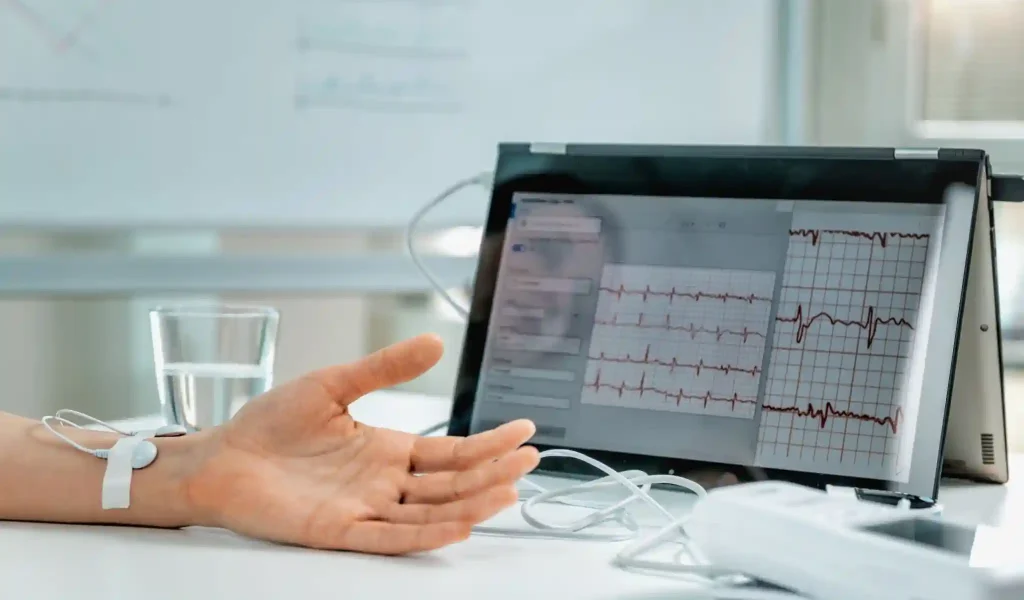
Modern wearables do far more than count steps. Depending on the device, they can track heart rate variability, blood oxygen levels, respiratory rate, skin temperature, sleep quality, and in some cases, perform a single-lead ECG reading directly from your wrist. Continuous glucose monitors, worn as a small patch on the arm, give people with diabetes real-time readings of their blood sugar without a single finger prick. The depth of data these devices generate gives clinicians a much richer picture of a patient’s health than a ten-minute office visit ever could.
From Consumer Gadget to Clinical Tool
What started as lifestyle technology has crossed into legitimate clinical territory. Devices like the Apple Watch and certain Fitbit models have received FDA clearance for specific health monitoring functions, including irregular heart rhythm detection. Continuous glucose monitors are now prescribed by physicians and reimbursed by insurance in many cases. The distinction between consumer-grade and medical-grade wearables still matters. Consumer devices are useful for general health awareness, but medical-grade patient monitoring technology goes through rigorous accuracy testing and regulatory review before it can inform clinical decisions.
Remote Patient Monitoring: Bringing the Clinic Into the Home
How Remote Monitoring Programs Work in Practice
A remote patient monitoring program typically starts with a patient receiving a kit of devices at home, which might include a blood pressure cuff, a pulse oximeter, a weight scale, or a wearable sensor, depending on their condition. The devices connect to an app or a cellular hub that automatically transmits readings to the care team. Clinicians review that data on a dashboard and receive alerts when readings fall outside a set range. For a patient recovering from heart surgery, for example, this setup means their cardiologist can see their heart rate, oxygen levels, and weight trends every single day without the patient needing to travel to a clinic.
The Impact on Hospital Readmission Rates
The evidence behind remote patient monitoring is solid when it comes to keeping people out of the hospital. Programs targeting patients with congestive heart failure, chronic obstructive pulmonary disease, and hypertension have shown meaningful reductions in readmission rates when patients are monitored at home after discharge. That matters for more than just cost reasons, though the cost savings are real.
AI and Predictive Alerts: Catching Problems Before They Escalate
Collecting data is only half the challenge. The other half is making sense of it fast enough to actually help someone. This is where artificial intelligence earns its place in patient monitoring. AI systems layered on top of monitoring platforms can scan thousands of data points at once and identify patterns that would take a human clinician much longer to spot. These systems are being used to predict sepsis risk hours before symptoms become obvious, detect atrial fibrillation from wearable ECG data, and flag patients whose vital signs suggest they are deteriorating before a crisis occurs. The design challenge is managing alarm fatigue. If a system sends too many alerts that turn out to be nothing, clinicians start ignoring them.
Patient Monitoring Technology in Chronic Disease Management
Diabetes Management and Continuous Glucose Monitoring
Continuous glucose monitoring has genuinely changed life for people managing diabetes. Instead of checking blood sugar manually several times a day, a CGM sensor worn on the arm provides a real-time reading every few minutes along with trend arrows showing whether glucose is rising or falling. That trend data is often more clinically useful than a single number because it tells you what the body is doing, not just where it is at a given moment. In closed-loop systems, the CGM connects directly to an insulin pump and adjusts insulin delivery automatically based on glucose readings.
Heart Disease, Hypertension, and Cardiac Monitoring
Cardiac care has been one of the biggest beneficiaries of patient monitoring technology. Implantable loop recorders sit just under the skin and monitor heart rhythm continuously for up to three years, catching arrhythmias that would never show up during a standard 30-second ECG. Remote blood pressure monitors allow hypertension management to happen based on dozens of real readings taken at home rather than the one or two measurements taken in a clinical setting, where anxiety alone can skew the result. Cardiac event monitors worn by patients who experience occasional palpitations can capture the rhythm during an actual episode rather than hoping one occurs during a scheduled test.
Mental Health Monitoring: A Growing Frontier
Mental health is one of the newer and more sensitive areas where patient monitoring technology is starting to make an appearance. Passive sensing through smartphones can track behavioral signals like changes in sleep patterns, reduced physical activity, fewer social interactions, and altered phone usage habits, all of which can serve as early indicators of a depressive episode or mood shift. Digital therapeutics platforms deliver structured cognitive behavioral therapy through apps and collect data on mood, sleep, and symptom severity over time. Privacy is a serious and legitimate concern in this space, more so than in physical health monitoring, because the data involved is deeply personal.
Challenges and Limitations That Still Need to Be Solved
Data Privacy, Security, and Patient Consent
When health data is being transmitted continuously from a home device through an app to a cloud server and into a clinical dashboard, the number of potential points of vulnerability is real. Patients have a right to know exactly where their data goes, who can see it, how long it is stored, and what happens if there is a breach. HIPAA provides a framework in the United States, but gaps exist, particularly for consumer health apps that fall outside the traditional healthcare system.
The Digital Divide and Equity in Access
Not everyone has equal access to these tools, and that gap matters. Device costs, even when partially covered by insurance, remain a barrier for lower-income patients. Rural communities often lack the broadband infrastructure needed to reliably transmit health data. Older adults, who often have the most to gain from continuous monitoring, may find the technology harder to set up and use.
Conclusion
Patient monitoring technology is not about replacing the human side of healthcare. It is about giving that human side better information to work with. Clinicians who can see what is actually happening with their patients between visits can respond faster, make better decisions, and build more meaningful care relationships. Patients who are actively monitored feel less isolated in managing their health. The challenges around privacy, access, and data overload are real and deserve serious attention. But when this technology is implemented thoughtfully, it makes care more continuous, more personal, and more effective. That is exactly the direction healthcare needs to keep moving in.
Frequently Asked Questions
Q1. What is patient monitoring technology, and how does it work in everyday healthcare settings?
Patient monitoring technology refers to digital tools, including wearables, remote sensors, and connected devices that track health data continuously and transmit it to care teams for real-time clinical decision-making and intervention.
Q2. How does remote patient monitoring help reduce hospital readmissions for chronic disease patients?
Remote monitoring tracks daily vitals like blood pressure and oxygen levels at home, allowing care teams to catch warning signs early and intervene before conditions worsen enough to require emergency hospitalization.
Q3. Are wearable devices used in patient monitoring technology clinically accurate enough to trust?
Medical-grade wearables go through FDA clearance and accuracy testing before clinical use. Consumer devices offer useful health awareness but should not replace clinically validated tools when medical decisions are involved.